Understanding Neutron Irradiation Damage in High-Purity Graphite for HTGR Reactors
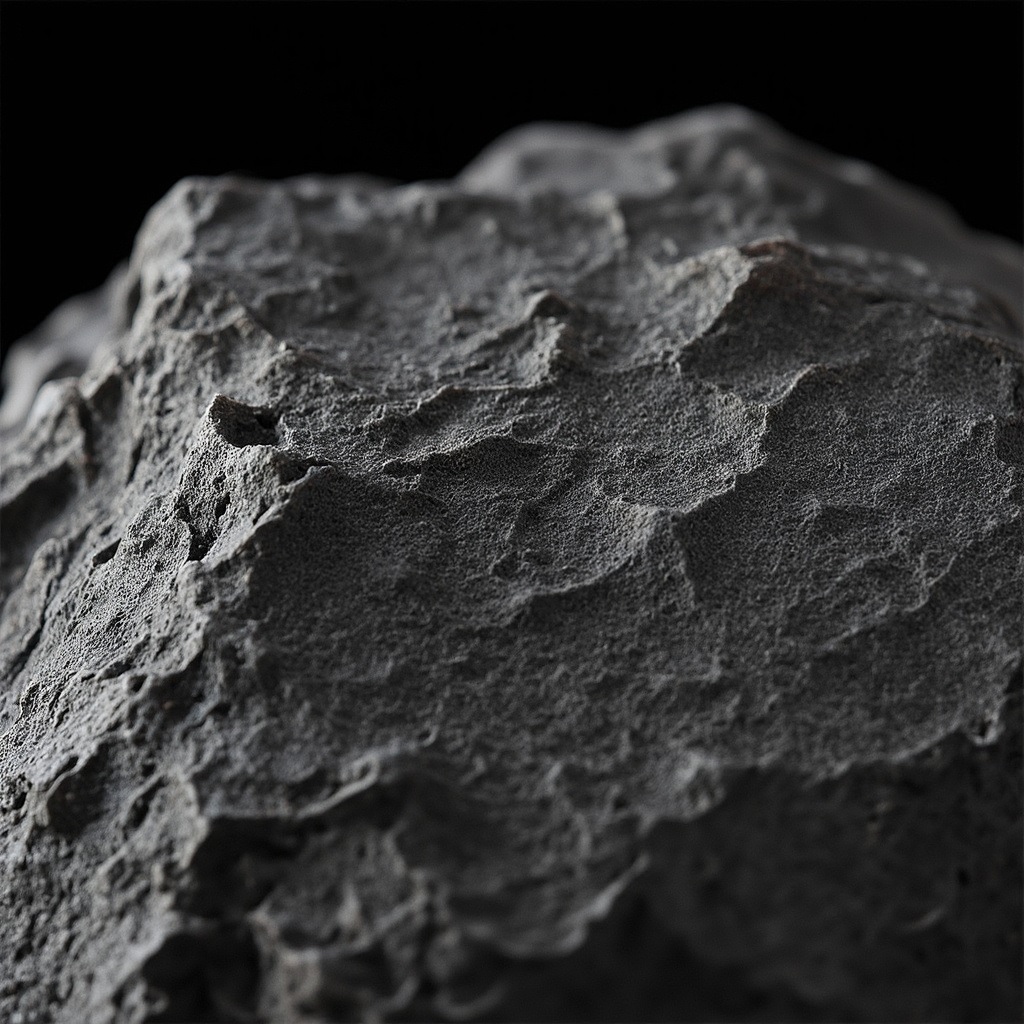 You can’t build a high-temperature gas-cooled reactor without staring down the elephant in the room: neutron irradiation damage. It’s the silent, invisible enemy that gnaws at the very skeleton of your reactor core. And if you’re relying on just any graphite, you’re not building a reactor—you’re building a ticking clock. Let’s cut through the noise and talk about what really happens when those neutrons start flying, and why the material you choose isn’t just a detail; it’s the difference between a 40-year lifespan and a catastrophic redesign.
When a neutron slams into a carbon atom in a graphite lattice, it’s not a gentle tap. It’s a violent displacement. The atom gets knocked out of its cozy hexagonal home, creating a vacancy. That displaced atom then goes ricocheting through the crystal like a pinball, creating a cascade of defects—interstitials, clusters, and dislocations. Over time, this microscopic chaos manifests as macroscopic problems: dimensional change, stored energy (Wigner energy), and a dramatic shift in thermal conductivity. Your pristine, High-Purity Graphite starts to swell, shrink, or warp depending on the dose and temperature. It’s not a linear process, and it’s not forgiving.
Here’s where the marketing talk meets the hard science. The term “high-purity” gets thrown around like confetti, but in the world of HTGRs, it’s a life-or-death specification. Impurities—even trace amounts of boron, vanadium, or nitrogen—act as neutron sponges. They absorb the very particles you need to sustain the fission reaction, poisoning your core and reducing efficiency. Worse, some impurities transmute into radioactive isotopes under neutron bombardment, turning your moderator into a waste disposal headache. A truly high-purity graphite, with ash content measured in parts per million, doesn’t just perform better; it stays cleaner, lasts longer, and gives you predictable, repeatable behavior under flux.
But purity alone isn’t the silver bullet. The microstructure matters. You need a graphite with a fine, isotropic grain structure that can accommodate the internal stresses from irradiation without cracking. Think of it like a well-engineered concrete: you want the aggregate to be uniform, the binder to be strong, and the whole thing to handle thermal cycling without turning into dust. The best grades for HTGRs are those that have been specifically designed and tested for low dimensional change and high resistance to creep under irradiation. This isn’t a commodity product. It’s a precision material.
So, what does this mean for your reactor design? It means you don’t get to cut corners. You need a supplier that can provide a complete pedigree—irradiation test data, thermal property curves, and a proven track record in research reactors or prototype HTGRs. You need a graphite that has been purified to near-theoretical limits, with a consistent pore structure that minimizes the buildup of internal stresses. You need a material that, when you run the neutronics and thermal-hydraulic models, gives you confidence instead of margin-eating uncertainty.
The bottom line? Neutron irradiation damage is a given. It’s going to happen. The question is whether your graphite is engineered to handle it gracefully or to fail spectacularly. High-purity graphite for HTGRs isn’t just a block of carbon—it’s a carefully crafted, radiation-hardened component that takes the heat, the flux, and the years of abuse without losing its cool. Choose wisely, because in this game, the graphite doesn’t just support the reactor. It is the reactor.